Trump: War on Iran will be "short-lived"
Fady Mahouly
11:04 · 10 March 2026
2 min read
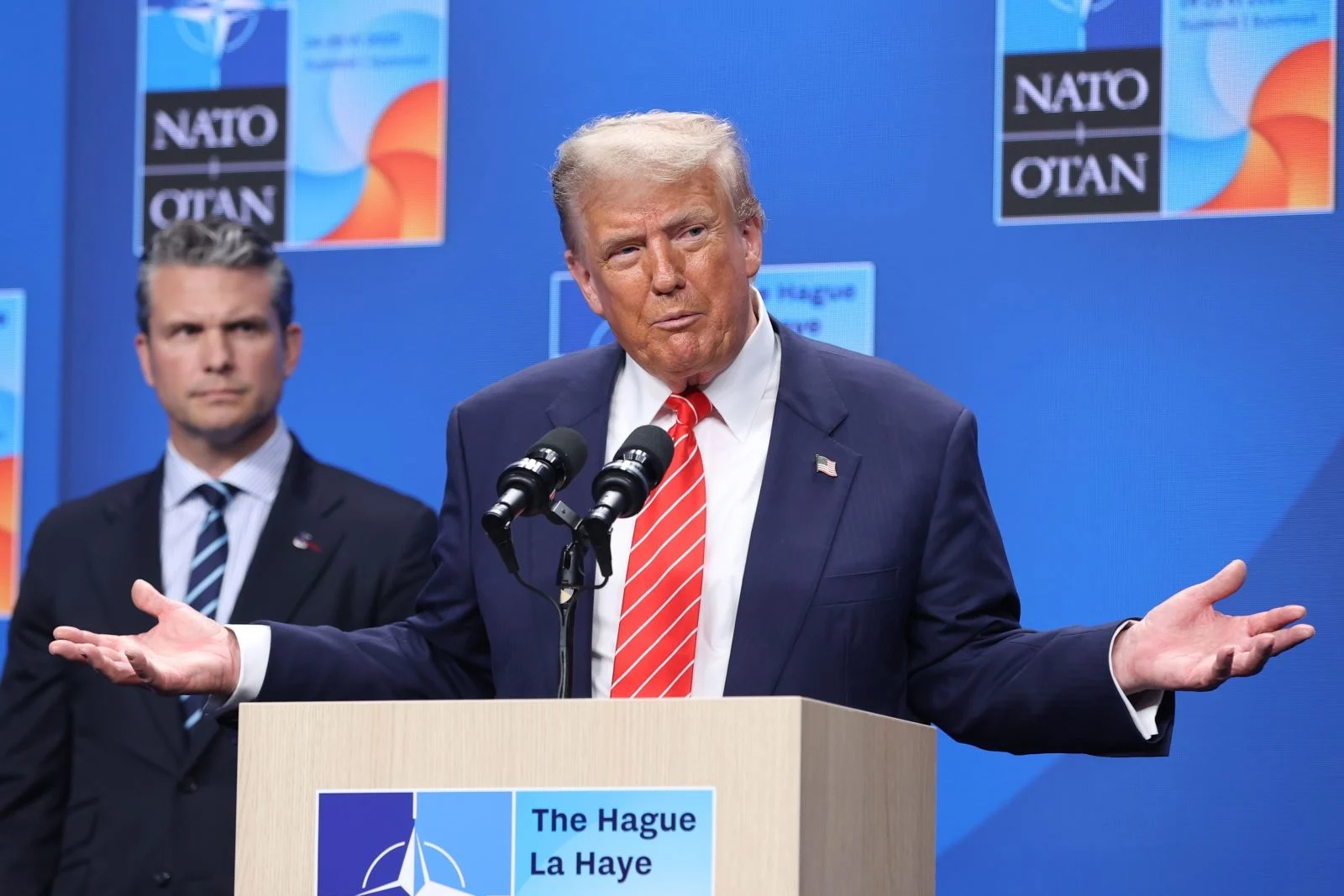
US President Donald Trump said that the war against Iran would be "short-term."
He stressed that military operations will continue until a “complete and decisive victory” over Tehran is achieved.
He added during a press conference in Miami that the United States and Israel "crushed Iranian military capabilities" during the ongoing operations.
He pointed out that the strikes led to the destruction of Iran's nuclear capabilities, stressing that Tehran no longer has only 20% of the missile stock that it had before the outbreak of war.
Trump said that American forces sank all Iranian ships during the recent confrontations, noting that military operations in Iran are complex but are proceeding successfully.
He added that his country moved militarily to prevent a possible Iranian attack, saying: “If we had not attacked Iran, it would have preceded us in attacking.”
Trump accused Iran of launching missiles at neutral countries in the Middle East, considering that this confirms the seriousness of the Iranian threat in the region.
In a related context, the US President expressed his "disappointment" in the selection of Mojtaba Khamenei as Supreme Leader of Iran to succeed his late father, Ali Khamenei, considering that this "will exacerbate the same problem that the country is suffering from."
Trump also confirmed that the United States is conducting an investigation into the strike that targeted a girls’ primary school in the city of Minab in southern Iran during the first days of the war, which according to the Iranian authorities resulted in the deaths of more than 150 people.
He said: "This is being investigated now... and whatever the report shows, I am ready to accept it."
On the economic side, Trump announced that the United States may abandon some oil-related sanctions to ensure sufficient supplies to global markets and reduce prices, indicating that Washington may lift some restrictions “until the Strait of Hormuz is opened.”
He added that oil prices did not rise as much as expected despite the war.

← Previous article
Pope Leo XIV expresses his pain over the martyrdom of Father Pierre Al-Rahi